
Arrest Records and Court Charges
In St. Louis County, an arrest record is not the same thing as a criminal disposition file. The arrest record usually reflects booking information and initial reporting details from enforcement channels, while court charges are created through the charging process and become part of the district court record stream.
For charge tracking, St. Louis County is accessed through Minnesota District Court record channels, not a separate county-only trial-court system. Arrest context can also be linked to county custody channels that are not part of the same search interface. Use court channels for charges and case progress, and use sheriff channels for public custody lists and related booking status.
Search Channels for St. Louis County Records
The primary channel for charge records in St. Louis County is the Minnesota Court Records Online interface. It is strong for case-level discovery but does not replace official channels for certified records and non-remotely available documents.
- Open https://publicaccess.courts.state.mn.us/CaseSearch.
- Use the Name, Case Number, Citation Number, or Attorney tab based on what is known.
- Choose county and St. Louis County in the location filter.
- Set the right case category for Criminal, Family, Civil, or Probate or Mental Health.
- Open the case record, then review case status, parties, hearing activity, and public documents.
Use case-number search when name search fails for pending criminal, traffic, or petty misdemeanor matters with no conviction. Use county clerk channels for certified copies and records not available under remote-access limits.
Source: https://www.stlouiscountymn.gov/departments-a-z/sheriff
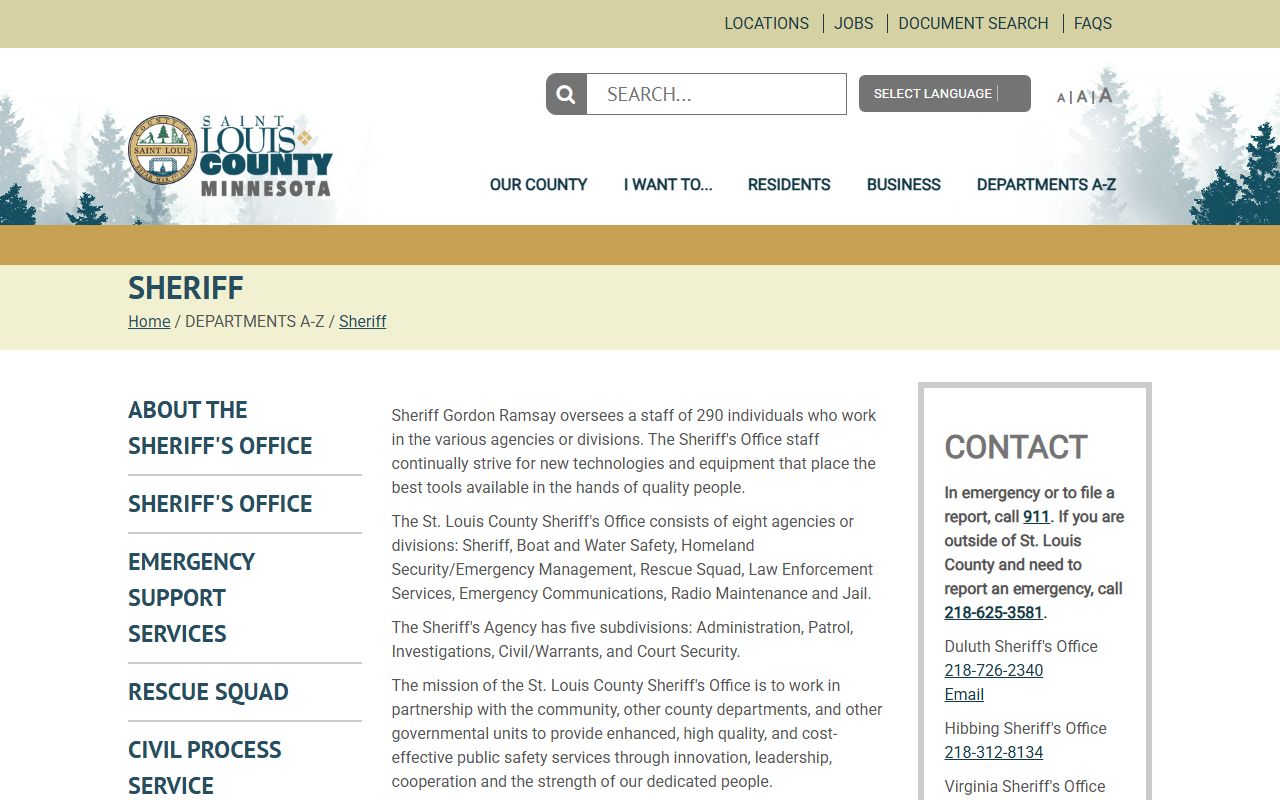
The sheriff channel is the custody-facing side for enforcement activity, while the court charge record is routed through state court access and filing systems.
Source: https://www.stlouiscountymn.gov/departments-a-z/sheriff/about-the-sheriffs-office/our-staff
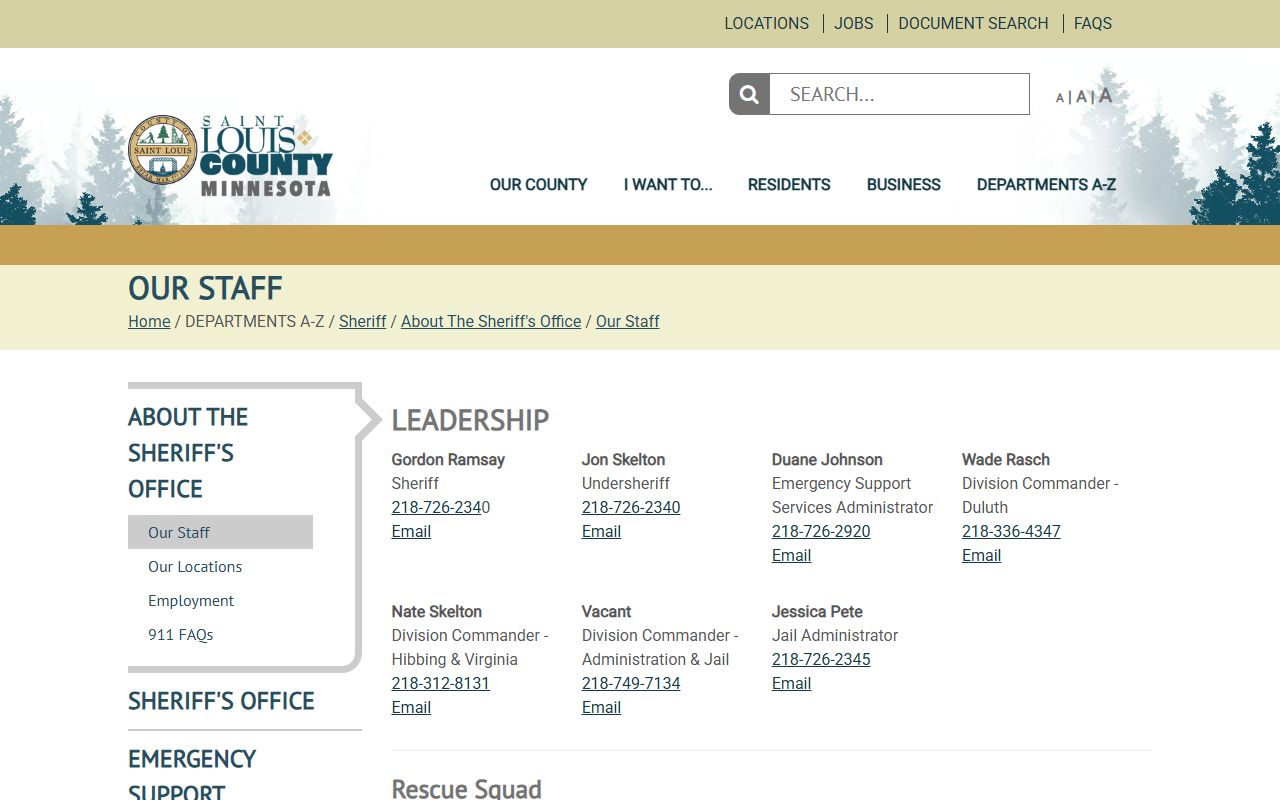
Leadership and command information supports the non-court custody side when callers need confirmation before relying on a public list.
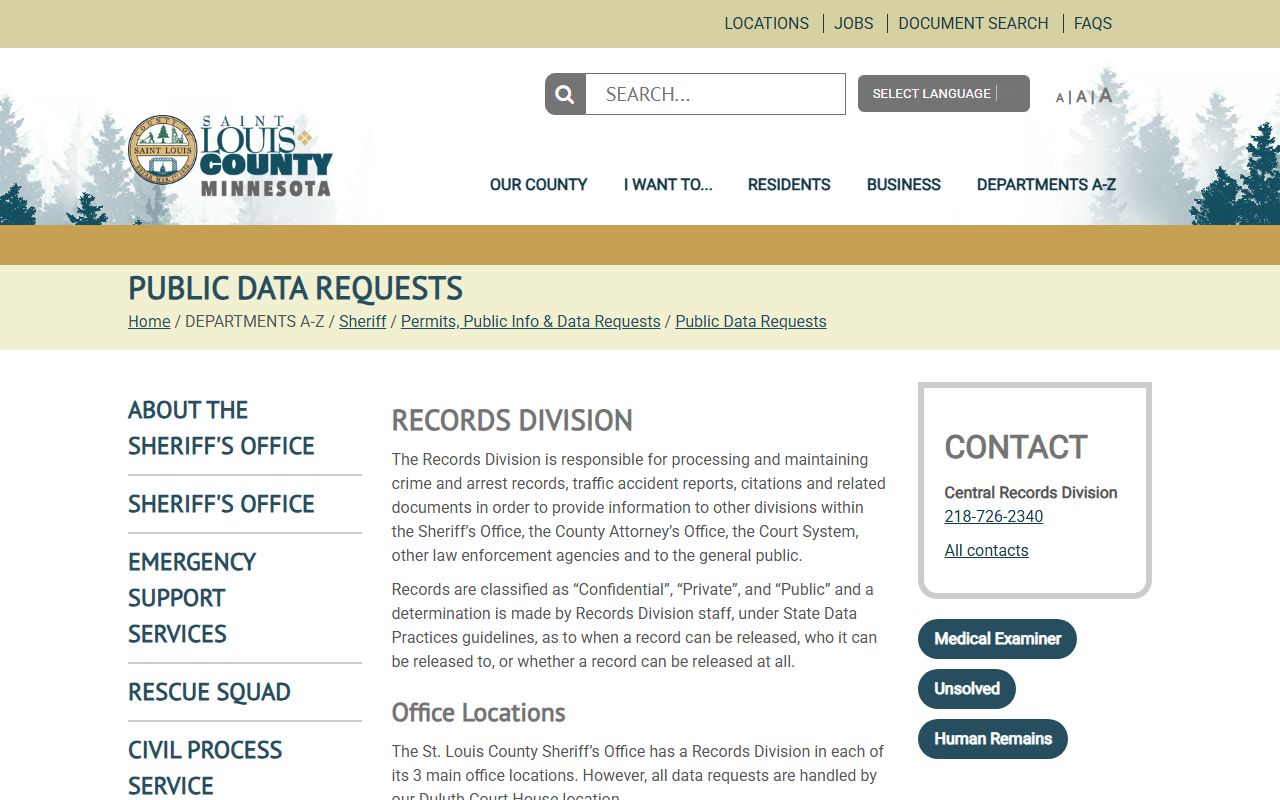
For arrest-side custody details that are not public in court records, the sheriff request path is the official starting point, with handling by the Duluth courthouse central records desk.
How Charges Are Filed After Arrest
After detention and booking, the prosecutor filing path defines the court charge record. The arrest event creates public custody history. The charging document creates what people usually treat as the legal case structure.
St. Louis County District Court filings in criminal matters can begin through complaint style processes and complaint-related updates depending on case type, then appear in case records and hearing queues once the file is active.
| Document Type | Who Files | Common Use | Appears in Court Record |
|---|---|---|---|
| Complaint | Officer or prosecutor filing process | Initial filing in many lower-level criminal matters | Shows initial charge narrative, parties, and case creation |
| Information | Prosecutor | Most serious and formal charging entries | Creates prosecutorial allegation trail and hearing path |
| Indictment | Grand jury | Most often for the highest level felony stream | Reflects serious criminal prosecution tracking in court |
What to Expect in a St. Louis County Charge Record
A charge record is usually organized around the case file, not by citation alone. The strongest identifiers are filing numbers and hearing references. Public records can include party names, filed charges, status updates, and hearing or courtroom details depending on remote restrictions.
- Case number. Identifies the district file and supports county-limited filtering by St. Louis.
- Case category. Shows criminal, civil, family, probate, or mental-health filing type.
- Charge and offense details. The filed counts and legal charge language that started the court stream.
- Court location. Indicates whether the matter is listed under Duluth, Hibbing, or Virginia.
- Judicial officer and courtroom data. The assigned judge and hearing slot for appearance tracking.
- Hearing type. Covers arraignment, plea, trial, sentencing, or review events.
- Register of Actions. A chronological case timeline where public activity is available.
- Public document links. Documents that can be released remotely under Minnesota rules.
Charge Status and Disposition Tracking
Charge status is one of the most practical ways to interpret active legal risk. A charge can remain active for long periods before disposition. Users should also distinguish it from final case outcome and sentencing status.
This table tracks common charge states in St. Louis County case views:
| Status | Meaning |
|---|---|
| Pending | Filed and not yet resolved. Many pending traffic and petty criminal matters may not show by person name at this stage. |
| Amended | The prosecutorial version of a charge has been updated or modified. |
| Reduced | The court file can show a downgrade or alternative filing path for the same incident. |
| Dismissed | The filing has been dismissed and is no longer pursued as an active charge. |
| Nolle prosequi | The prosecutor elected not to pursue prosecution on that count. |
| Convicted | Charge outcome tied to a judgment pathway, often shown with sentencing details. |
Charges vs Convictions
Charge comparison is often misunderstood because being charged is not the same as being convicted. A St. Louis County file can contain serious allegations with different eventual outcomes.
| Item | Charges | Convictions |
|---|---|---|
| What it represents | Alleged conduct alleged in the criminal process | Court finding or plea that establishes guilt |
| When it is recorded | At filing and before trial disposition | After plea, trial, or judgment action |
| Who drives it | Prosecution request and court filing | Judge, jury, or plea procedure outcomes |
| Public visibility | Often visible earlier in case details | Usually visible once disposition is entered |
| Legal effect | Sets the case path | Changes legal consequences and record consequences |
For legal outcomes or background-history questions, Minnesota BCA criminal-history channels are distinct from court charge record lookup and have different access policy.
Sealed vs Expunged
St. Louis County files can include public restrictions that go beyond ordinary timing differences. Sealed data and expungement routes change who can see what, and they are governed by state rules and court orders.
Unsealed records are generally visible under public-access and remote-release rules. Sealed records are restricted to the channels and authorization the court order allows. Expunged treatment is ordered by statute or court action and can remove or limit public online exposure. Juvenile and sensitive proceedings often carry additional limits on top of sealing and expungement.
State Law Guidance for Access
Access to arrest-related records and court charges in St. Louis County sits on two frameworks: court public-access rules for filing data and government-data practice rules for law-enforcement and custody data.
Important sources:
Minn. Stat. 13.82 - law-enforcement public data framework and release limits.
Minn. Stat. 13.87 - criminal-history data rules and public interfaces.
Rule 4 - court records access standards and nonpublic categories.
Source: https://www.revisor.mn.gov/statutes/cite/13.82
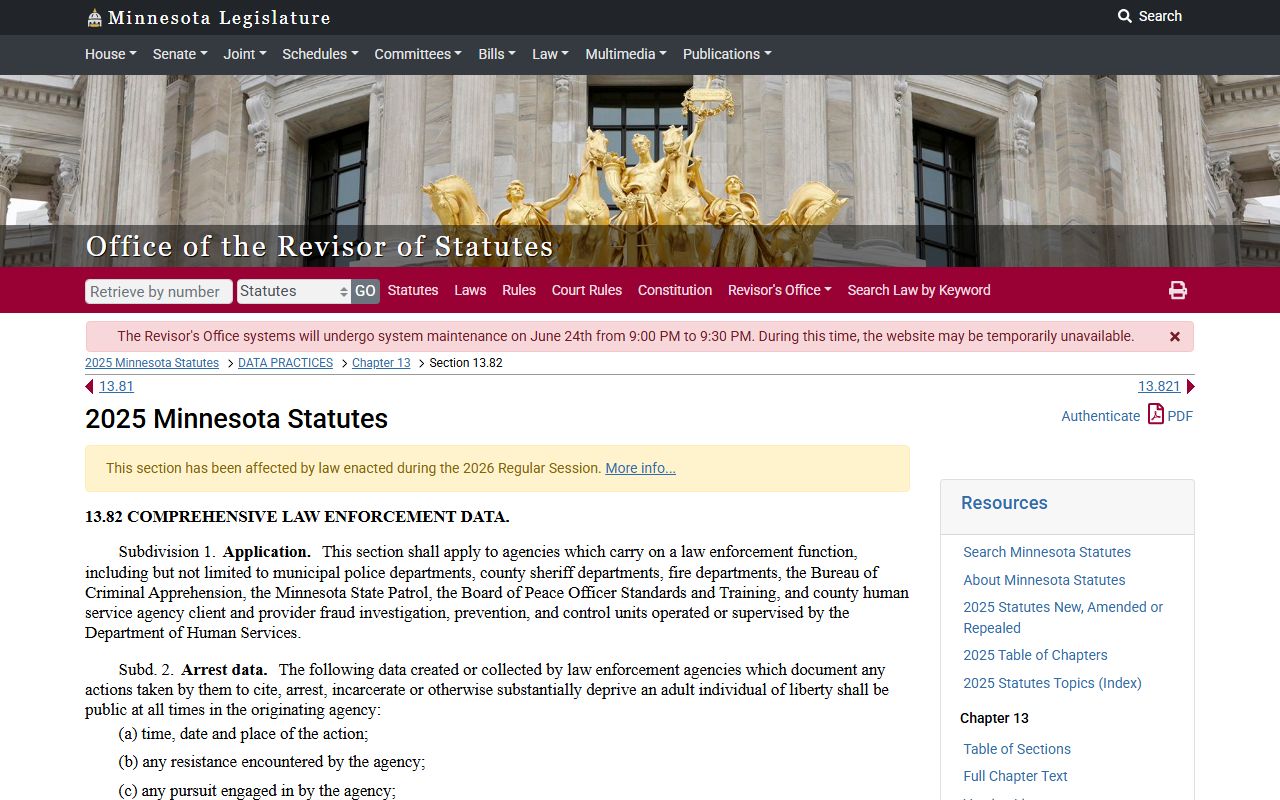
The statute provides the line between open public release and enforcement data that can be withheld for operational reasons.
Federal and Background Channels
Some charges can generate downstream references in federal sources, but those references are separate channels and not substitutes for St. Louis County court charge records.
When background context is needed after the county record review, use official state and federal channels directly. The federal sources do not replace Minnesota filings and case numbers.
Source: U.S. Attorney District of Minnesota
Federal channels can add context on serious criminal matters but should be read after confirming the official St. Louis County filing path.
County Attorney and Public Defender Roles
In St. Louis County, the County Attorney’s Office handles prosecution and filing direction. The office operates for crimes and public-safety related actions in district files.
A public defender or appointed counsel can be requested in criminal matters, including misdemeanors and felonies where jail exposure is possible. The defender eligibility process is distinct from record access and follows court procedure at first appearance or before case events.
Source: https://www.stlouiscountymn.gov/departments-a-z/attorney and https://www.pubdef.state.mn.us/offices
Restricted Charge Records in St. Louis County
Juvenile delinquency files and some restricted case categories are limited by law and by public-access rules. Many protective-order streams are also limited in remote channels. Address and sensitive identifiers may be redacted in public output.
If a specific charge cannot be found by name, search by case number before concluding no record exists. Pending criminal, traffic, and petty misdemeanor filings are common examples where name search can appear incomplete.