
Criminal Court Records in St. Louis County
Criminal court records reflect the formal record of court action after charges are filed, including the case filing, hearing activity, plea posture, disposition, and sentencing entries. In St. Louis County, criminal matters are handled by the Minnesota District Court as part of its unified trial jurisdiction, with local filing and hearing points in Duluth, Hibbing, and Virginia.
The criminal workflow includes misdemeanor and felony prosecutions, plus traffic-related and juvenile-related channels when the underlying matter is criminally categorized. Because this county has no separate county-at-law criminal court line, most criminal records remain in the same trial-court stream with case-number prefixes such as 69DD or 69VI that identify county and location context.
Source context for legal referral and local criminal support services:
https://mn.gov/law-library/research-links/legal-referrals/stlouis.jsp
The criminal record context links directly to nearby legal resources for parties needing representation or case interpretation.
How to Search St. Louis County Criminal Court Records
Start with Minnesota Court Records Online case search. This channel is the principal public view for criminal case events, charges, and hearing summaries for St. Louis County. Use the case category filter and county filter before running a broad name query.
- Open MCRO Case Search.
- Choose Criminal category and set Court Locations to County.
- Search by defendant name or exact case number if name matching is incomplete.
- Review the case view for hearings, registers of actions, and public documents.
- Contact District Court Administration for certified copies and any restricted records not shown online.
Practical limitation: Pending criminal and petty traffic matters may not appear by defendant name before conviction, so exact case number should be used when available.
If the case is not visible by name in the portal, verify it by case number and then confirm with the office where the case was filed.
Stages of a St. Louis County Criminal Case
Most criminal records in the public portal reflect the movement from filing through disposition. Knowing the stage helps identify where a missing field is expected. For example, a file may exist but not yet have a plea line if it is still pretrial in certain settings.
Case flow: Charge Filing › Arraignment › Pretrial or Motions › Plea or Trial › Disposition › Sentencing
| Stage | What Happens |
|---|---|
| Charge Filing | Complaint details and initial matter classification become part of the case identity. |
| Arraignment | Defendant address, charges, and court appearance status are first recorded. |
| Pretrial or Motions | Motion filings, continuances, and counsel activity may add multiple docket entries. |
| Plea or Trial | Disposition route begins with plea or adjudicative hearing outcome. |
| Disposition | Final status updates include acquittal, dismissal, or conviction outcomes where available. |
| Sentencing | Sentence terms and conditions appear in public records and order text when available. |
What a St. Louis County Criminal Court Record Shows
Criminal records include structured values from the case filing and update stream. The same record can contain both court events and party-level identifiers. Field visibility may vary by role and privacy rule.
| Field | What It Shows |
|---|---|
| Case Number | Trial court identifier such as 69DU-CR-25-809, where county and category can be read from the prefix. |
| Case Title / Parties | Filing-side party names and role designation for the criminal case. |
| Court Location | Duluth, Hibbing, or Virginia filing context in St. Louis County. |
| Filing Date | Date the charge matter was opened in District Court. |
| Charges | Statute and conduct references associated with the prosecution. |
| Plea | Any change from not guilty to plea entries and related motion posture. |
| Disposition | Outcome status including conviction, dismissal, acquittal, or no final disposition. |
| Sentence | Custody, probation, fines, or special conditions when sentencing events are public. |
| Judicial Officer | Judge or hearing officer assigned to the criminal case event. |
| Registers of Action | Chronological event list tied to court orders, filings, and hearings. |
Charges, Convictions, and the Public Record
Being charged is not the same thing as being convicted. Criminal court records can show original charge language even when later outcomes include dismissal, reduction, or acquittal. This distinction matters for legal interpretation and for any third-party background context.
Use the case flow to see where the matter moved from accusation to final outcome. A dismissed charge remains part of the public event log, but the legal consequence differs from a conviction or a plea to guilt.
| Stage | Charge | Conviction |
|---|---|---|
| Initial filing | Public accusation is listed with the charging context. | Not yet determined. |
| Case progression | May be amended, dismissed, or reduced during pretrial. | Appears only when adjudicated. |
| Outcome | Can remain dismissed or withdrawn. | Appears with disposition and sentencing records. |
County Attorney and Public Defender Paths
The County Attorney’s Office prosecutes felony and misdemeanor matters for St. Louis County, while public defense services apply based on a defendant’s ability to retain counsel and case status. A defendant can request public defender services through legal channels, and representation questions should be handled with an attorney before major hearing steps.
County Attorney office channels include Duluth, Hibbing, and Virginia contact points, while public defense referrals are available through the state board resources in Duluth.
Source link for county attorney overview:
https://www.stlouiscountymn.gov/departments-a-z/attorney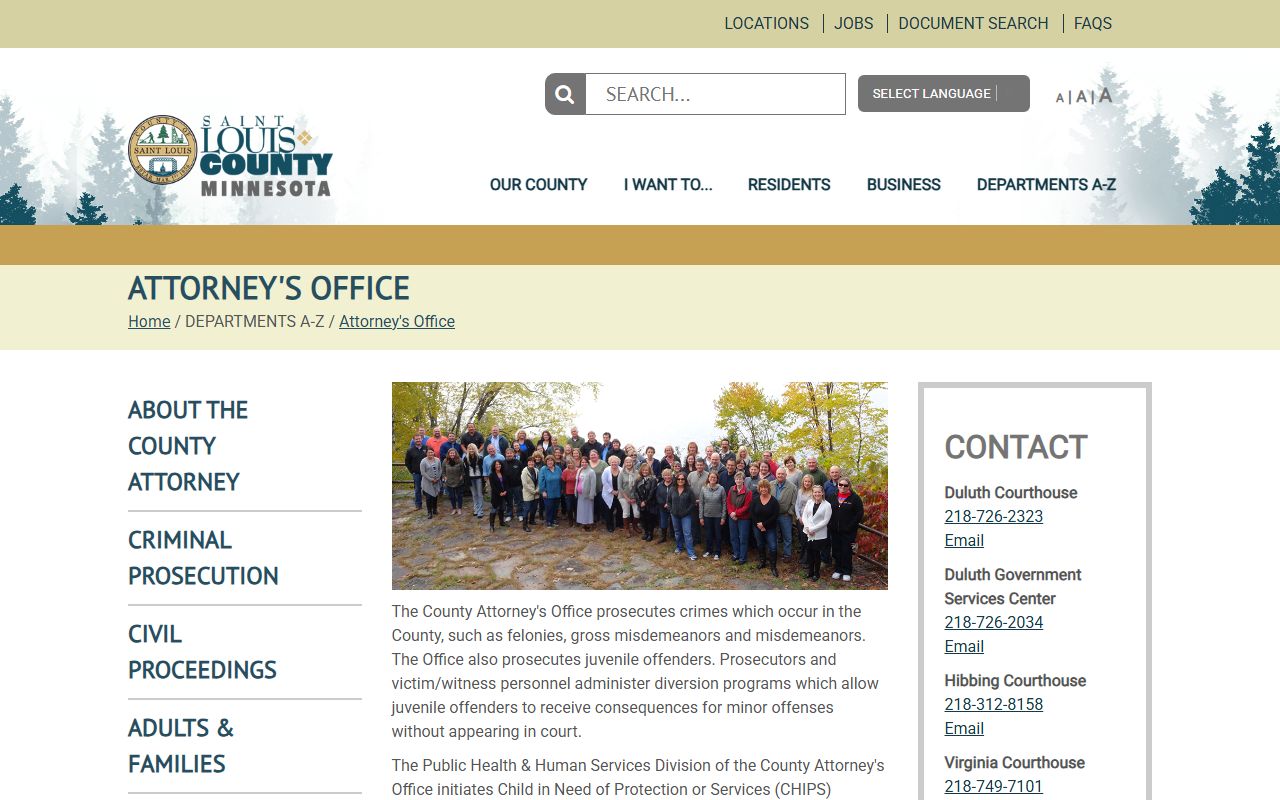
Prosecutorial details help clarify where criminal case strategy and hearing notices are managed.
Source link for Minnesota public defense resources:
https://www.pubdef.state.mn.us/offices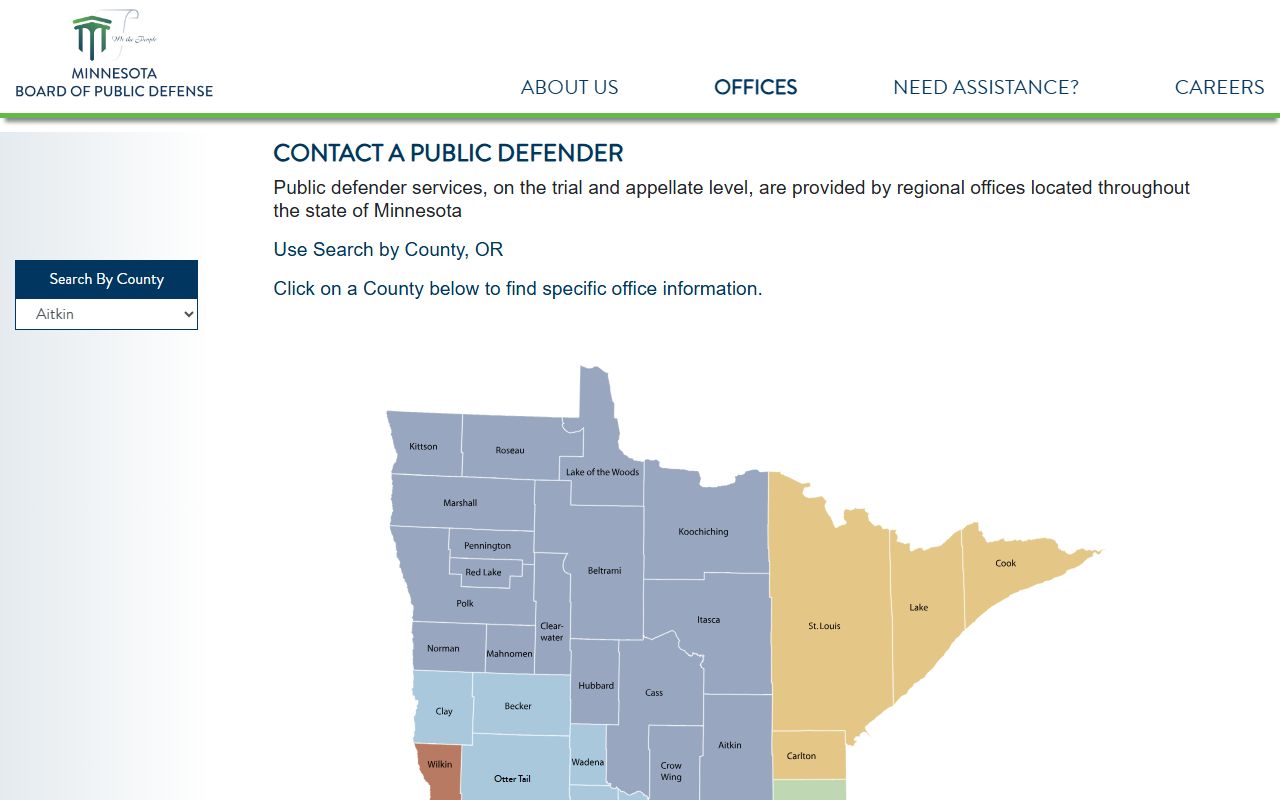
Defense access points are essential when filing deadlines, counsel notices, or appearance questions arise.
Reading Sentences, Dispositions, and Hearing Outcomes
Disposition entries can show conviction, dismissed counts, continuances, and sentencing outcomes. In many files, sentencing is a discrete event after disposition and includes conditions, financial obligations, and correctional details, but access can differ by case type. A case that remains pending may show no final sentencing fields until it closes in a legal event sequence.
Common criminal terms to track include not guilty, guilty, nolo contendere, deferred placement, dismissal, or deferred finding. The same file may include hearing resets that change dates without changing the underlying charge. Confirm the latest docket row and then open the full case details for continuity.
Criminal Court Records vs Criminal History
Use BCA criminal-history search for broad background context, but keep it separate from court file interpretation. Court files track judicial action and case events while criminal history databases are a separate legal data stream.
Source link for Minnesota criminal-history context:
https://chs.state.mn.us/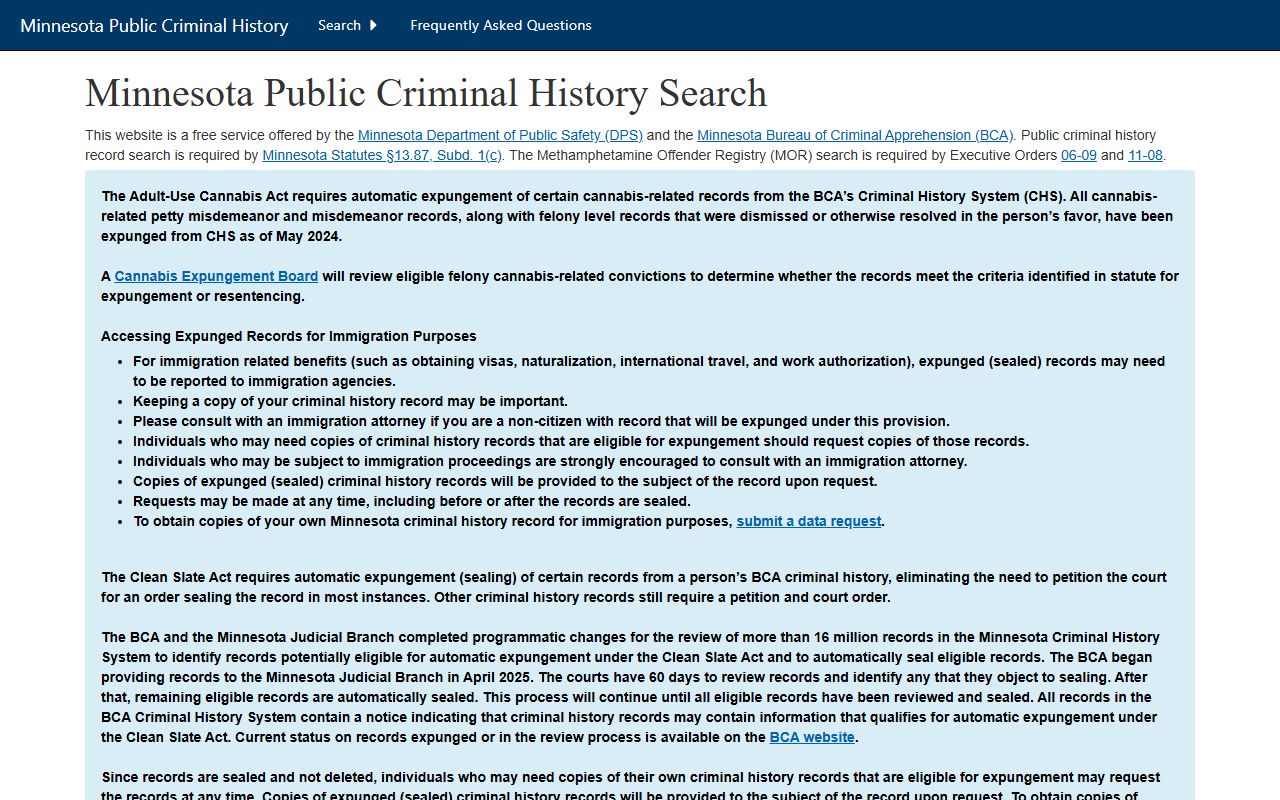
Use court records for procedural detail and docket context; use criminal-history tools for broader background reporting needs.
Sealed and Expunged Criminal Matters
Criminal records may be sealed or expunged by statute. A sealed record is restricted in public access after sealing, while expungement in Minnesota can limit visibility depending on the legal route. The same case number may still exist administratively, but public output changes based on court and statutory directives.
| Sealed | Expunged | |
|---|---|---|
| Public visibility | Generally hidden from ordinary remote public access | May be treated as limited for public availability |
| Access audience | Court-authorized parties and some statutory recipients | More restricted pathways depending on statutory terms |
| Use case | Common where court rules and policy support removal from public channels | Handled through Chapter 609A filing and hearing process |
Source link for criminal expungement statute:
https://www.revisor.mn.gov/statutes/cite/609A/full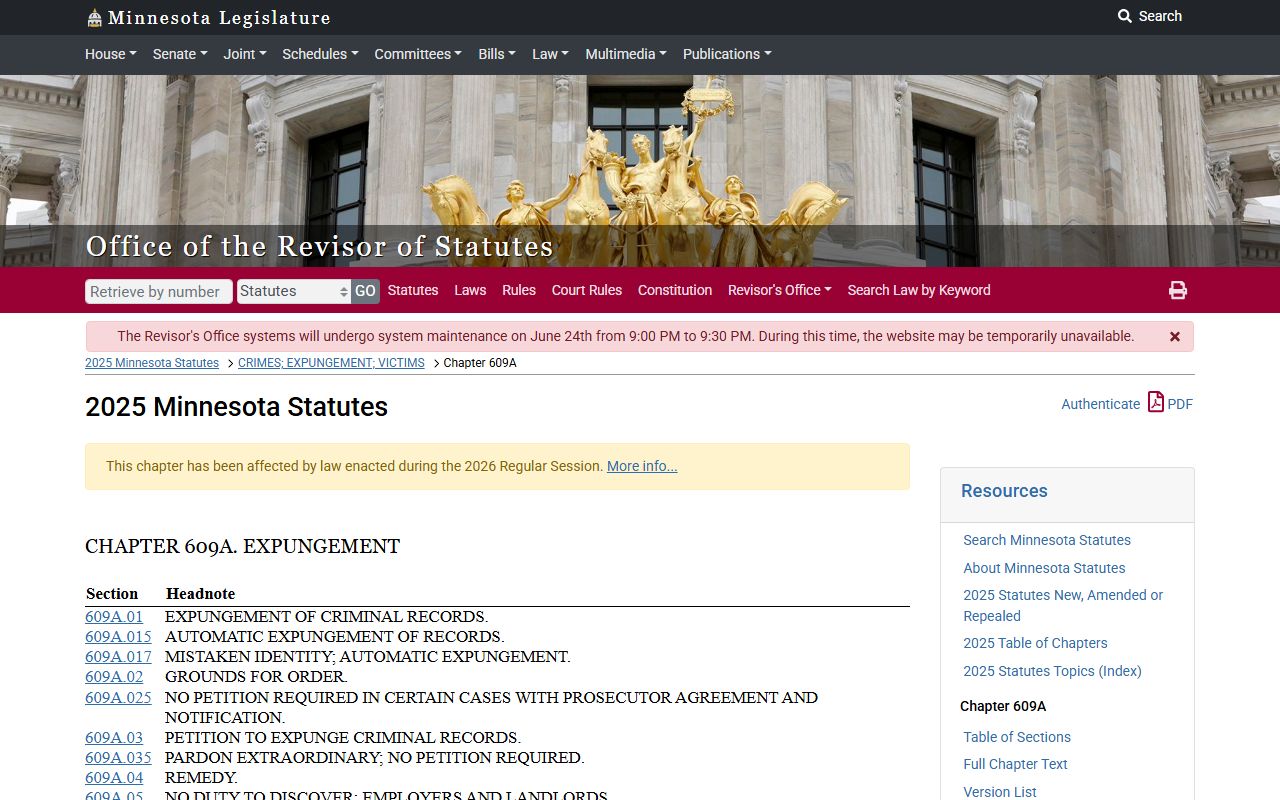
For practical outcomes, start with the filing office where the case is docketed and confirm expungement status before relying on any public output.
Restricted Criminal Court Records in St. Louis County
Juvenile, civil commitment, and some protected-case records have access limits. Rule 4 and the Rules of Public Access define when remote fields are hidden, redacted, or removed from public outputs. Address, comment, and sensitive identifiers are often withheld in remote outputs to protect privacy and security limits.
Section citations commonly used in practice include:
Minn. Rule 4 - access constraints for specific case types and restricted content categories.
Minn. Stat. 260B.163 - juvenile delinquency confidentiality.
Minn. Stat. 13.87 - criminal-history data standards.
When any of these limits apply, the fallback process is to confirm the matter with court administration and use certified channels for inspection.
Recent Criminal Case Activity and Local Trends
Public updates in the county and judicial system provide real case context and often confirm hearing activity that can appear first in news feeds before all fields in a docket chain are complete. St. Louis County has reported sentencing and verdict activity in cases such as 69VI-CR-25-809 and 69DD-CR-25-1689, with outcomes and hearing scheduling information that can guide deeper case verification.
For current follow-up in St. Louis County, pair these updates with case-number-level verification through MCRO and then local court office confirmation for exact disposition details.
Source link for criminal sentence update context:
https://content.govdelivery.com/accounts/MNSTLOUIS/bulletins/402e2e5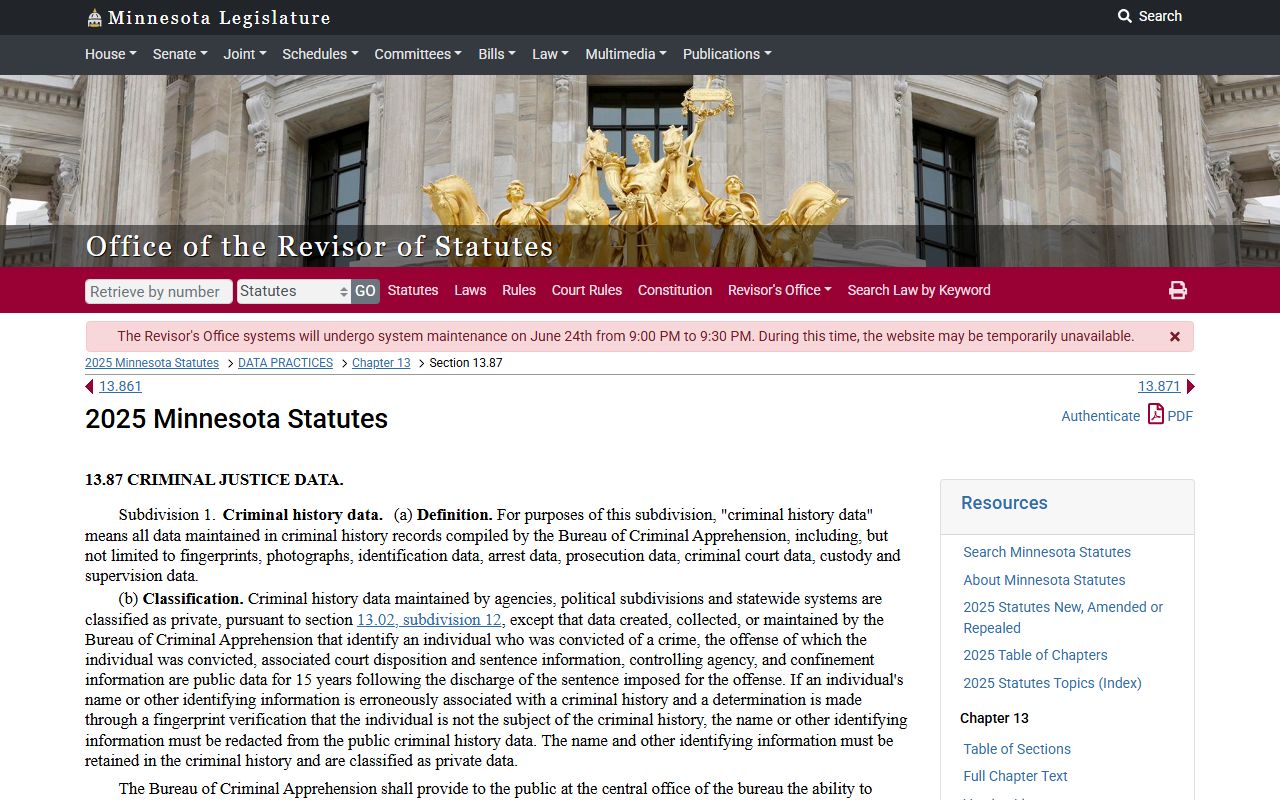
Current updates reinforce why court docket and case output should be reviewed together, especially for sentencing and appeal references.
Important: Court-access records are for public viewing and do not replace legal advice, and this site is not a consumer reporting agency under the Fair Credit Reporting Act.
Related Official Record Paths
Use separate record workflows when the question is not exactly a criminal case file. Arrest charges can be reviewed alongside filing context, warrant channels may confirm active obligations, and jail roster information is managed separately through the Sheriff system.
- Arrest Records & Charges for arrest-to-court-charge flow.
- Court Records for broader case-lookup context across civil and family categories.
- Warrant Records if an active warrant is tied to the criminal file.
- Inmate Records for current custody roster context.
Federal and Out of County Records Caveat
Federal warrants, federal detention actions, and federal court files are not the same as St. Louis County District Court criminal records. For federal court history, users should use PACER and federal court channels directly. For county-level criminal action, the District Court channels and local courthouse channels remain primary.