
St. Louis County Probate Records
Probate in St. Louis County is handled by the Probate Division of District Court. Minnesota does not use a separate surrogate court or orphans' court for this county. The same District Court system that handles civil, criminal, family, juvenile, and traffic matters also handles estates, wills, trusts, guardianships, conservatorships, and probate or mental-health case categories.
Probate is the court process for collecting, inventorying, and valuing a decedent's assets, protecting estate property, paying debts, and distributing what remains to heirs or beneficiaries. A will can guide that process, but having a will does not always mean probate is required. The need for probate depends on asset type, ownership, real estate, beneficiary designations, and value.
The Minnesota Judicial Branch probate, wills, and estates help topic explains the state probate framework used in St. Louis County.
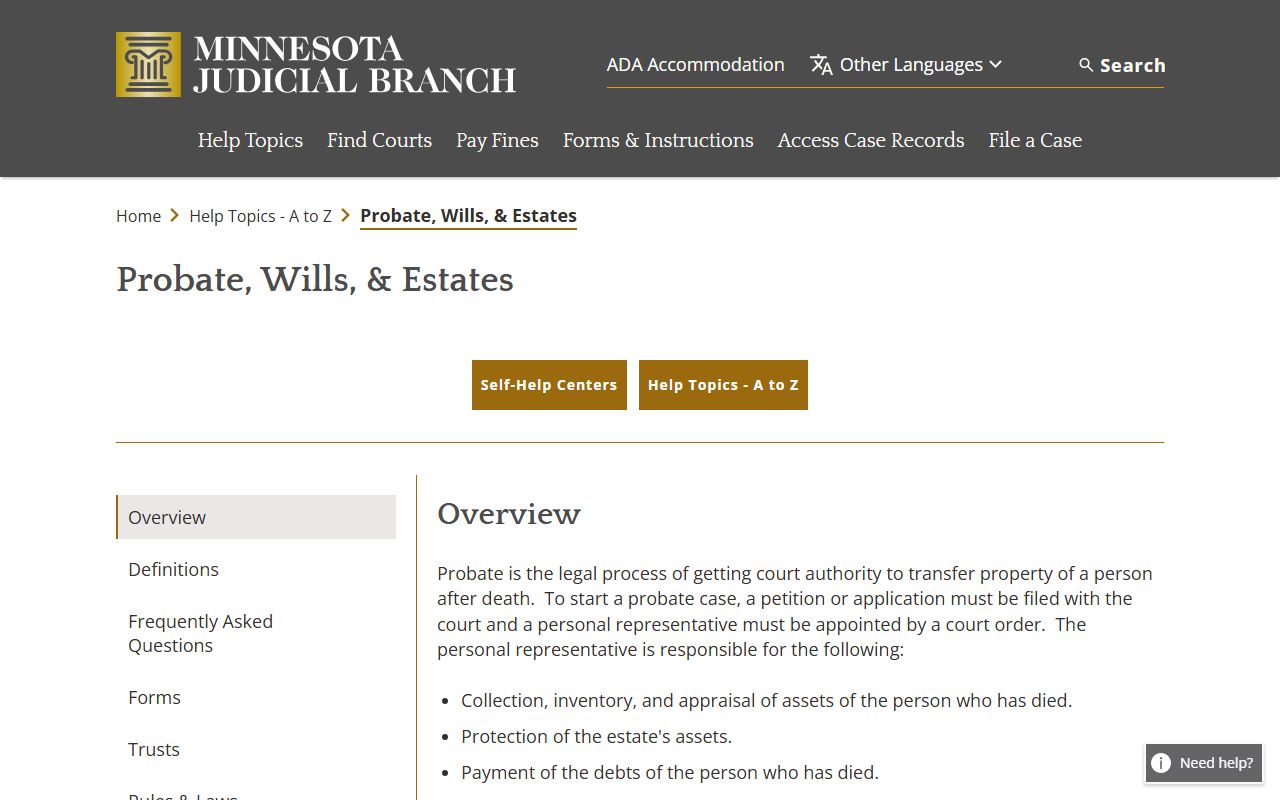
The state help topic is useful because St. Louis County probate records follow Minnesota District Court rules rather than a county-specific probate court system.
St. Louis County Probate Terms
Probate records use terms that can look formal but point to practical roles in an estate or protected-person case. These definitions help separate a deceased person's estate case from guardianship or conservatorship matters that may involve a living person.
- Testator
- The person who made a will before death.
- Personal representative
- The person appointed to collect assets, pay debts, and distribute the estate.
- Intestate
- Dying without a valid will, so state succession rules control who inherits.
- Guardianship
- A court case about personal care and decision-making for a protected person.
- Conservatorship
- A court case about management of a protected person's money or property.
Search St. Louis County Probate Records
Use Minnesota Court Records Online to search public probate case information when remote access is allowed. MCRO Case Search includes a Probate or Mental Health category checkbox, county filtering, case-status filtering, date-filed filtering, and case-number lookup. MCRO is not the certified court record. Certified copies and courthouse-only public records come from local court administration.
- Open MCRO Case Search and accept the terms.
- Search by name, case number, or attorney, depending on what is known.
- Use Court Locations, choose County, and select St. Louis for county-limited results.
- Select Probate or Mental Health under Case Category when narrowing estate or guardianship files.
- Open the case details for filing date, party names, docket events, hearings, and public documents when remote access permits.
- Contact the courthouse tied to the file for certified copies or records not displayed online.
| Search Field | How It Helps | Notes |
|---|---|---|
| Name | Search estate, protected person, petitioner, or party names. | Use exact names when possible. |
| Case Category | Limits results to Probate or Mental Health. | Useful because District Court handles many case types. |
| Court Locations | Filters to St. Louis County. | Choose County and select St. Louis. |
| Case Status | Separates active and inactive files. | Older estates may be inactive. |
| Case Number | Finds an exact PR file when known. | Use the court file number from notices or orders. |
The Minnesota Judicial Branch probate forms page supplies statewide forms used in St. Louis County probate cases.
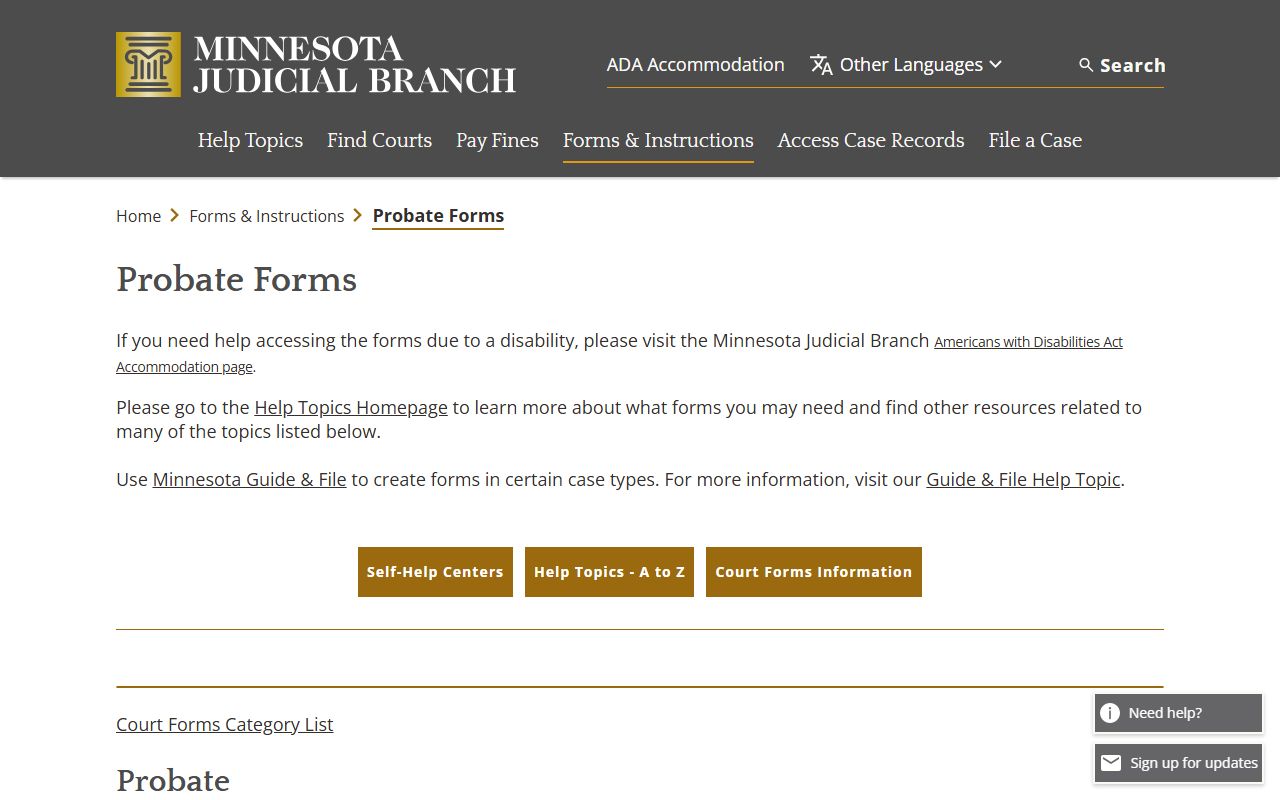
Probate forms support filing, but the record itself is searched through MCRO or requested through District Court Administration.
St. Louis County Probate Court Locations
St. Louis County has three full-service District Court locations. The Minnesota Judicial Branch notes that St. Louis is the only Minnesota county with chambered judges working in three separate courthouses. For probate records, that means the correct office may be Duluth, Hibbing, or Virginia depending on where the case is filed.
Duluth District Court
100 N. Fifth Avenue W.
Duluth, MN 55802
(218) 221-7560
Monday-Friday, 8:00 a.m.-4:30 p.m.
Hibbing District Court
1810 E. 12th Avenue
Hibbing, MN 55746
(218) 274-6007
Monday-Friday, 8:00 a.m.-4:30 p.m.
Virginia District Court
300 South Fifth Avenue
Virginia, MN 55792
(218) 305-7021
Monday-Friday, 8:00 a.m.-4:30 p.m.
St. Louis County Probate Filing Fees
Probate filing fees come from the Minnesota Judicial Branch District Court fee schedule, not a county probate clerk fee sheet. The research file did not capture a single county-specific probate add-on amount, so a filer should check the current District Court fee page before filing an estate, trust, guardianship, or conservatorship matter in St. Louis County.
| Item | Amount |
|---|---|
| Probate initial filing | Check current District Court fee schedule |
| Guardianship or conservatorship filing | Check current District Court fee schedule |
| Certified court copies | Confirm with local court administration |
| Criminal expungement comparison item | $310 listed in research for District Court fees |
The District Court fee schedule is the official place to verify current filing charges because probate categories and local copy charges may need court confirmation.
What St. Louis County Probate Records Show
A public St. Louis County probate case may show the estate or protected person name, case number, filing date, petitioner, applicant, attorney, and court location. Docket entries may list petitions, notices, hearings, letters, inventory filings, accountings, orders, and closing documents. MCRO may also show public documents when remote-access rules allow them.
Small estates may not require a full probate case. Minnesota allows an Affidavit for Collection of Personal Property when statutory conditions are met, including no solely owned real estate and personal property under the statutory threshold. The research file cites Minn. Stat. 524.3-1201 for the small-estate affidavit procedure.
The small-estate statute is one of the most useful probate access sources for St. Louis County residents.
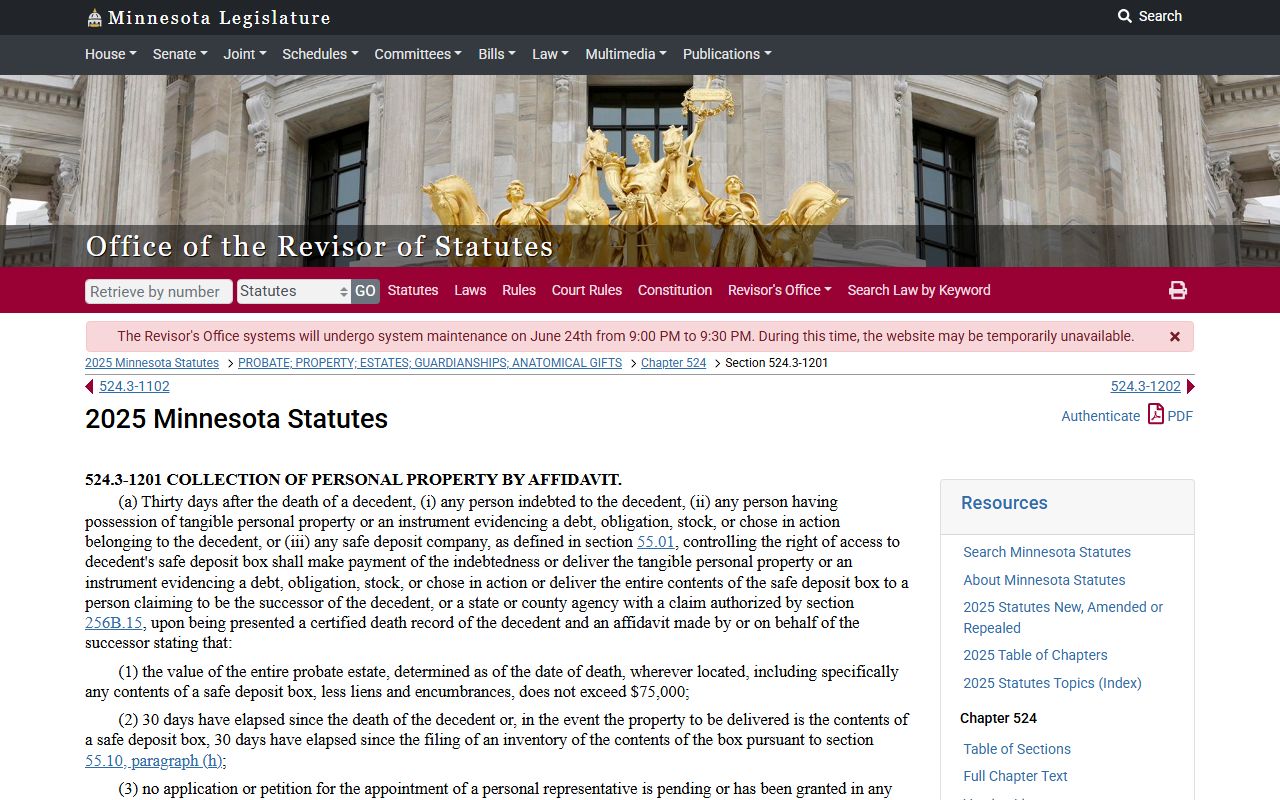
The statute helps explain why some family property transfers may not create a full public probate docket.
Restricted St. Louis County Probate Records
Probate access is not all-or-nothing. Estate cases are often more public than mental-health, guardianship, or conservatorship records. MCRO may show limited case data while withholding public documents from civil commitment case types. Sealed documents, protected-person details, medical information, financial account numbers, and other restricted data may be unavailable online or unavailable to the general public.
St. Louis County users should distinguish between probate estate files and family-law records that are not probate records. Marriage and dissolution statutes can appear near probate research because family status affects estates, but marriage licenses and divorce decrees are handled through separate county and court channels.
Minnesota's marriage license statute affects name and marital-status records that may later matter in estate administration.
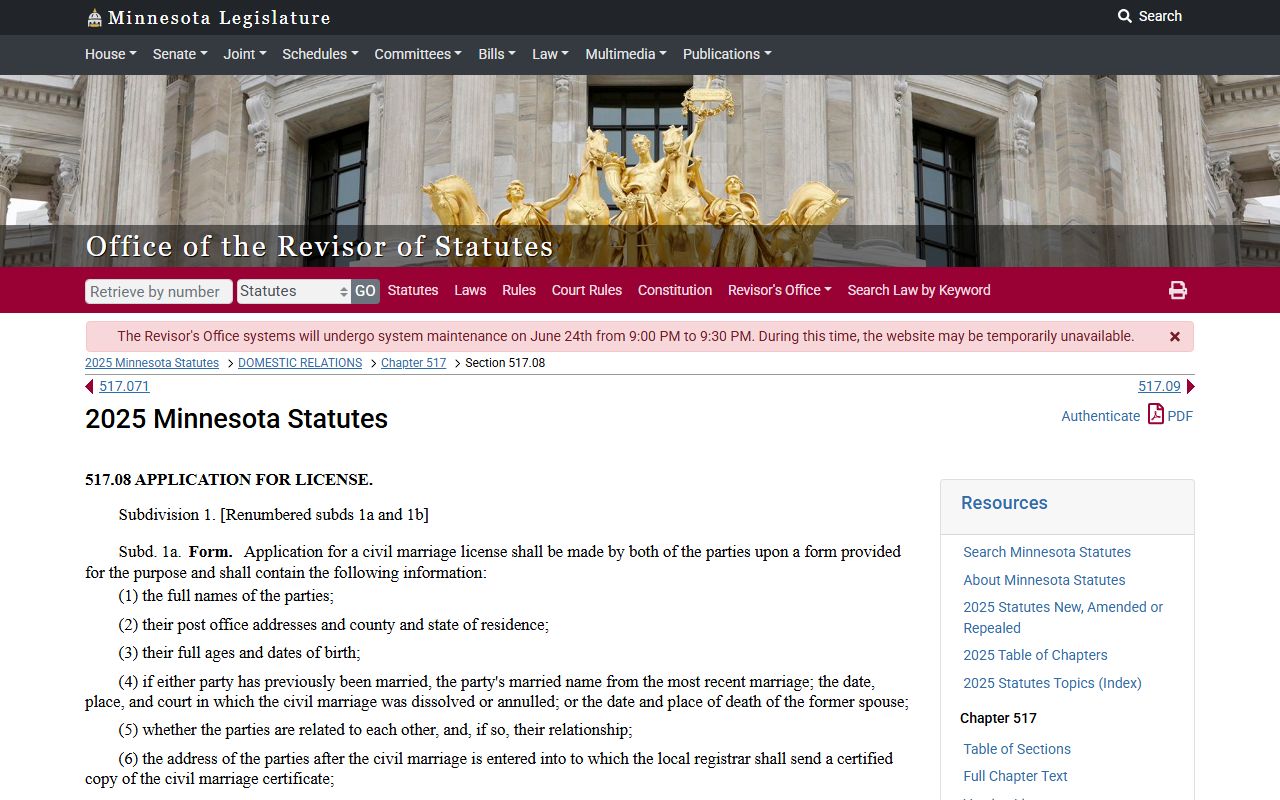
The marriage statute is not a probate filing rule, but it can affect the identity and relationship facts found in estate work.
The Minnesota prohibited civil marriages statute and dissolution definitions statute are also relevant when probate research turns on family status.
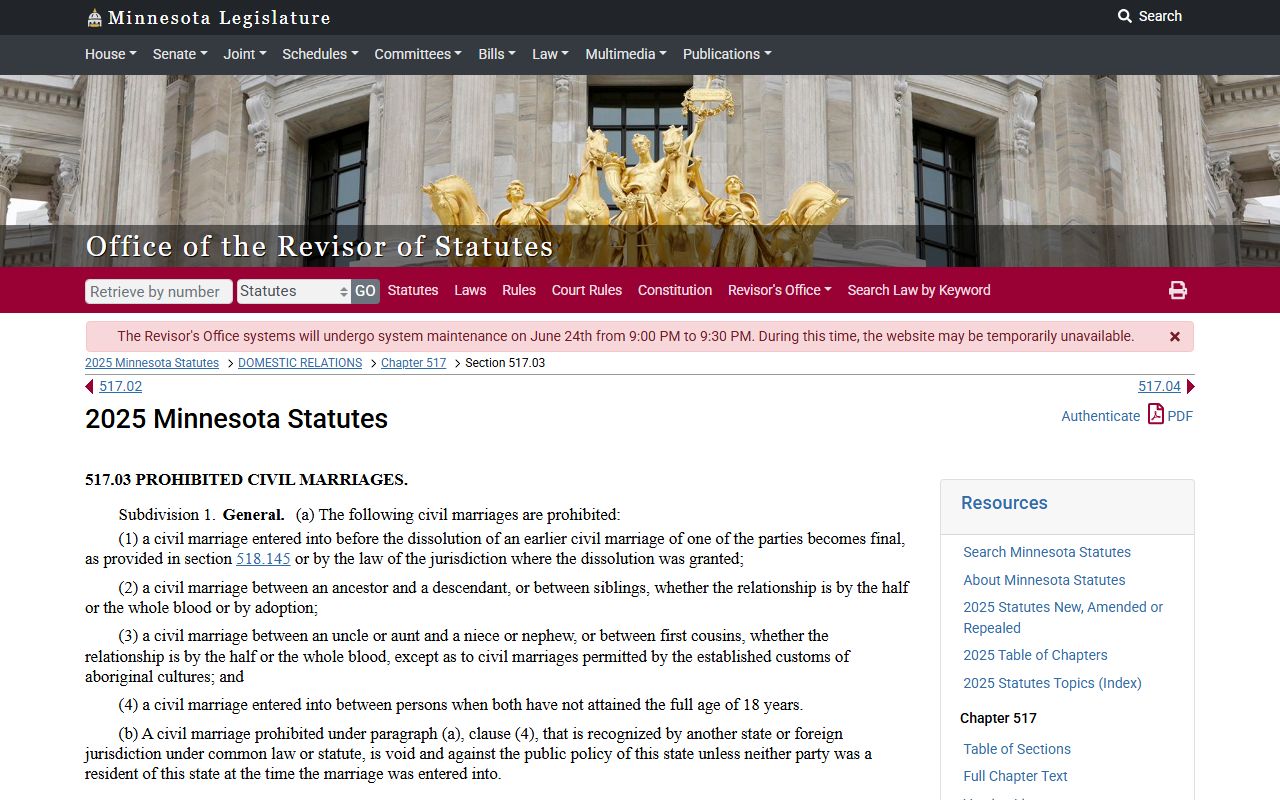
Relationship status can affect probate questions, but the probate case record itself remains in District Court.
The dissolution definitions source gives family-court terminology used when probate and divorce histories intersect.
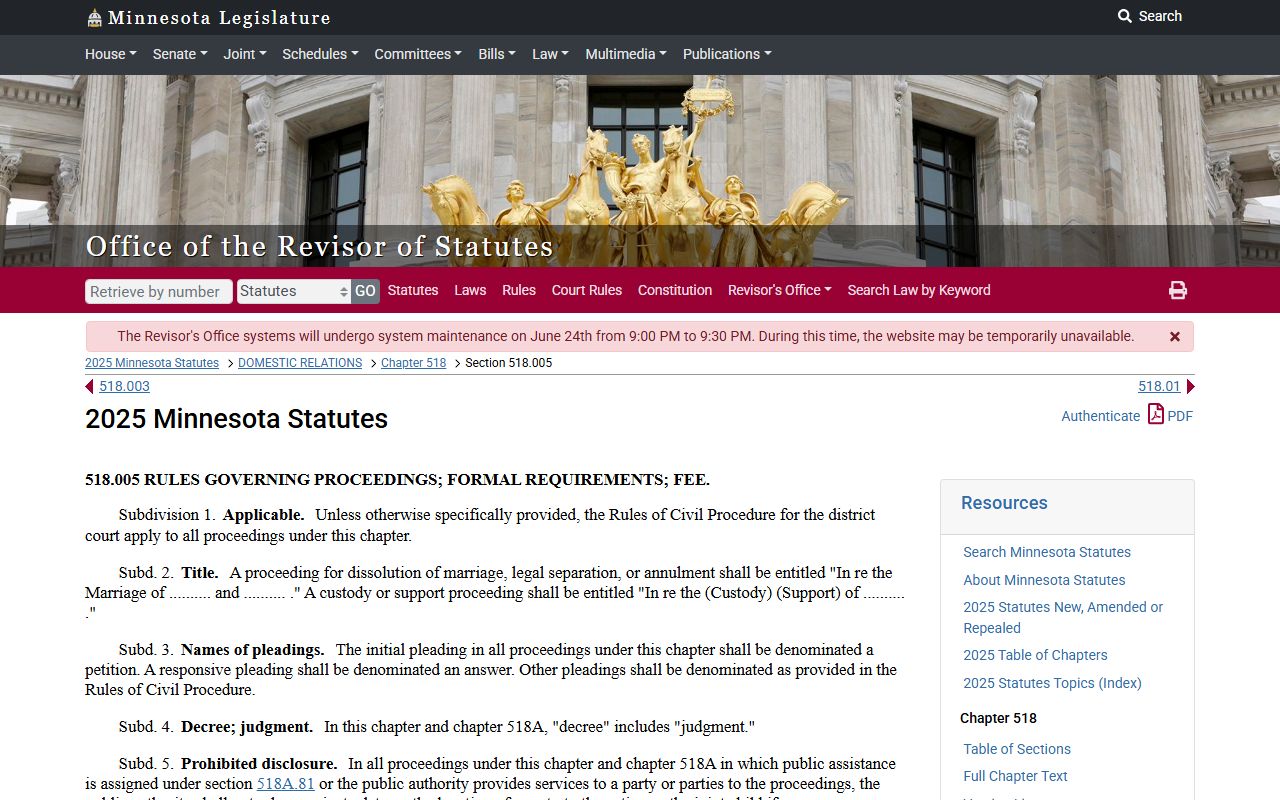
When a probate file depends on a prior divorce decree, the certified divorce record must still come from District Court Administration.