
St. Louis County Jail Roster Overview
The St. Louis County jail roster is a public custody list. It is distinct from court filing systems because it can move quickly with booking, transfer, release, or court appearance flows. The list is updated every hour, and people in intake may not appear until booking numbers are fully assigned.
The system serves enforcement and public notification functions. It includes county jail records as well as custody mentions for persons held on transfer. Inmates can be held in other facilities, including for overcrowding needs, and still be tied to St. Louis County proceedings.
One St. Louis County practical point is to confirm a name against date and offense details at the same time. The list is operational, and matching context reduces false positives when a name is common or spelled differently.
How to Use the St. Louis County Roster
The official roster page provides a direct current list and a 48-hour release list. It is not a query form with free-text name filters on the page itself. Results are used as a point-in-time public roster for custody transparency and booking verification.
For deeper confirmation, pair these with court channels and, when appropriate, sheriff public-data request contacts.
Because the list is published as current custody, a person in intake may not appear until a booking number is assigned. If that happens, the release list can still offer continuity if the person exited quickly.
- Open the jail roster page and confirm the current timestamp.
- Check if a person appears in the current list or if they are only in the recent release roster.
- Match name with age, charge text, and arrest location.
- If the person is not visible, confirm intake status through jail contacts.
Source: https://www.stlouiscountymn.gov/departments-a-z/sheriff/jail
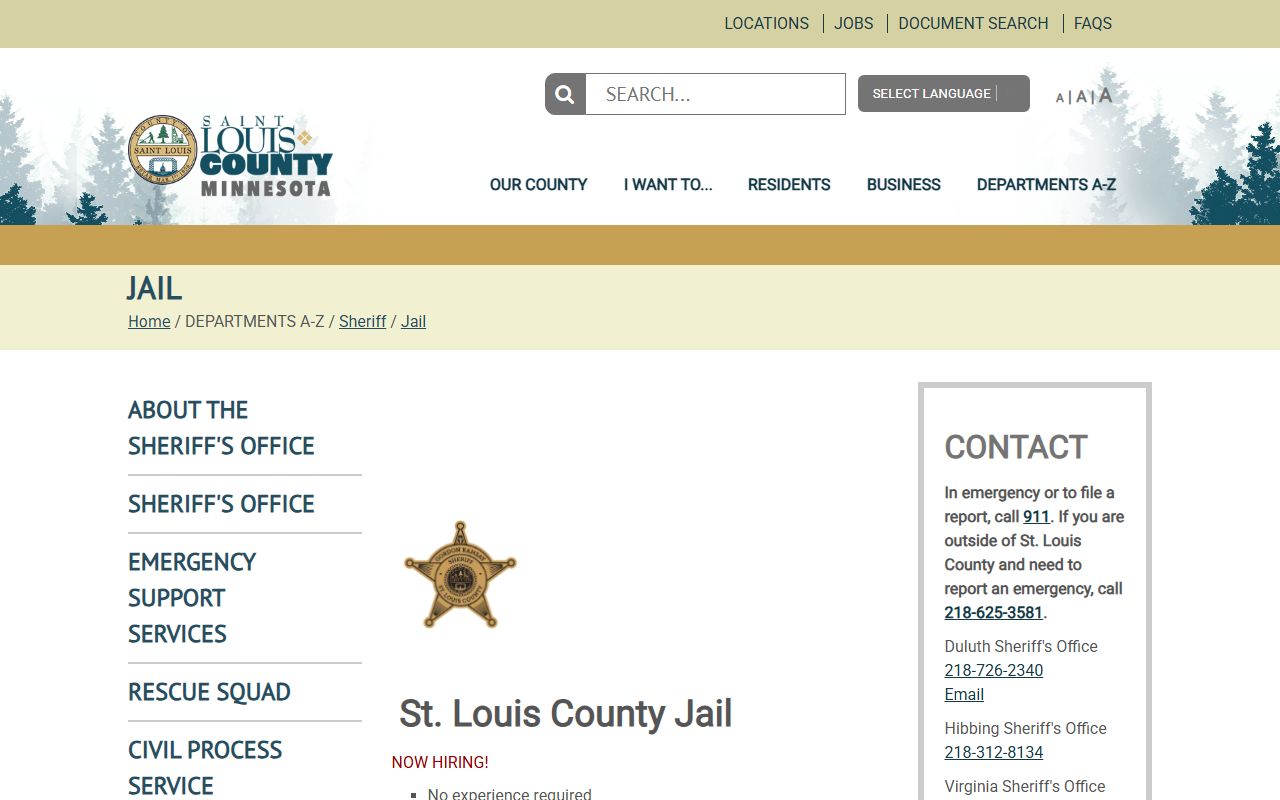
The page gives the official structure of facilities, programs, and services that support how inmate records are managed.
Source: https://www.stlouiscountymn.gov/departments-a-z/sheriff/jail/jail-roster
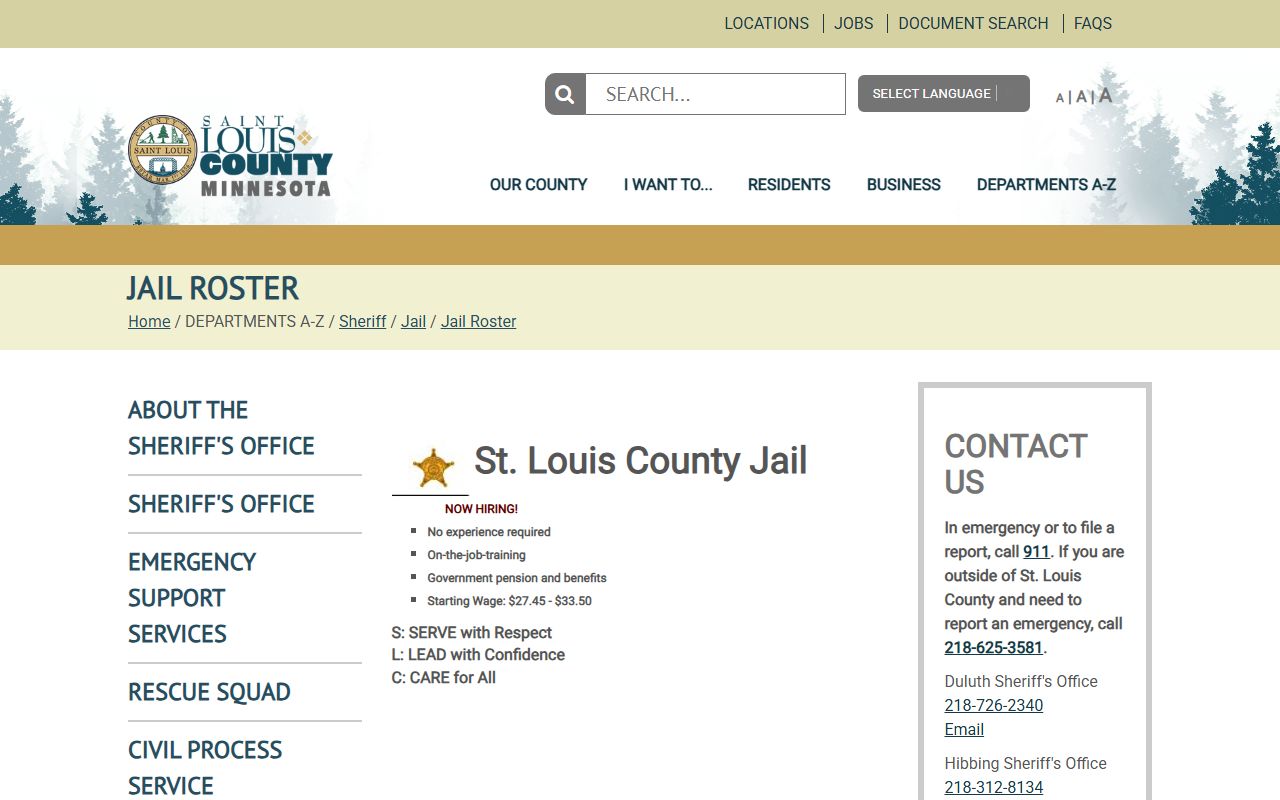
Use this page for current lists, roster updates, and public-data disclosure statements.
St. Louis County Roster Search Inputs
The roster does not provide a traditional form. It provides direct list-based lookup channels instead, which makes it simpler but also less flexible for misspelling correction.
Most successful public checks in St. Louis County use a two-pass path: current list first, then release list. For missing profiles, confirm case identity in court channels before concluding custody changed.
| Field or control | Type | Required | Notes |
|---|---|---|---|
| View Roster | Link / list | No | Shows current St. Louis County custody list entries. |
| View 48 hour release roster | Link / list | No | Shows recent releases for name matching by timing. |
| Update confirmation | Notice | No | Current list updates hourly, but intake lag can still occur. |
| Name and age verification | Manual review | No | Use identity fields visible in each row. |
| Court status | Secondary channel | No | Use MCRO case lookup for pending case context. |
Booking, Transfers, and Court Alignment
St. Louis County jail reporting can show a person in custody under multiple operational labels such as warrant, remand, sentence, or hold. The public roster reflects the immediate custody side, not every legal detail of the underlying case.
The page notes that transfers to other county facilities can happen for overcrowding and are not disciplinary. If a person is listed as held elsewhere, confirm the case in the court file and then call the receiving facility before acting on any assumption.
This helps prevent confusion when a person appears in another facility and still has active ties to St. Louis County proceedings.
What a St. Louis County Roster Entry Usually Shows
Roster entries are concise and operationally focused. Not every row shows every field in every snapshot, and formats can vary by source upload.
| Field | What It Shows |
|---|---|
| Name | Inmate name as provided in the intake chain. |
| Age | Estimated or reported age value. |
| Booking number | System ID assigned once intake is complete. |
| Location | Current facility or any transfer facility. |
| Bail | Bond amount or release status when listed. |
| Arresting agency | City, state patrol, sheriff, or state custody source. |
| Offense and offense level | Charges on an initial custody view. |
| Order type | Remand, warrant, hold, or related order basis. |
Jail Contact Cards
Use these channels when confirmation is needed on booking state, transfer, and property timing.
Duluth Sheriff Intake Desk
100 N. 5th Avenue W., Room #103
Duluth, MN 55802
(218) 726-2340
Central records desk for custody and public data requests
St. Louis County Jail
197-bed county detention facility with two 72 hour lockup units
Service calls and property updates use jail contact channels
(218) 726-2345
Call before visit or delivery confirmation
Sheriff Regional Contacts
Hibbing: (218) 312-8134
Virginia: (218) 471-7134
Outside county reporting: (218) 625-3581
Use these lines for custody status and reporting flow
Booking, Bail, and Court Status in St. Louis County
Jail records and court records are separate tracks. The roster may show custody status, offense, and bonds, while the court view provides hearing activity, plea, and disposition events.
When a person first appears in custody, booking can be delayed in roster output until a booking number is issued. When that happens, use court channels such as name case lookup or case number lookup for more robust case activity.
In St. Louis County, many custody outcomes are tied to court calendars, so hearing status and bond terms can change even when roster fields do not update at the same speed.
Quick rule: If you only see a name in one channel, never conclude the legal status from that channel alone.
Visitation Schedule and Rules
Visitation is controlled by the jail schedule and pre-registration requirements. The county pages identify lobby kiosk windows and a pre-registration window through a third-party scheduling service.
The county list identifies lobby kiosk hours as Monday through Friday from 8:00 a.m. to 10:00 a.m., with Saturday morning and afternoon windows, and Sunday afternoon windows.
Because this is an operational schedule, always verify in advance through the listed lines when there are transfers or emergency movement notices.
| Day | Hours | Method |
|---|---|---|
| Monday | 8:00 a.m. to 10:00 a.m. | Lobby kiosk |
| Tuesday | 8:00 a.m. to 10:00 a.m. | Lobby kiosk |
| Wednesday | 8:00 a.m. to 10:00 a.m. | Lobby kiosk |
| Thursday | 8:00 a.m. to 10:00 a.m. | Lobby kiosk |
| Friday | 8:00 a.m. to 10:00 a.m. | Lobby kiosk |
| Saturday | 8:00 a.m. to 11:00 a.m. | Lobby kiosk |
| Sunday | 3:00 p.m. to 5:00 p.m. | Lobby kiosk |
| All weekend | Saturday 8-11 and 3-5 | Depends on staffing and transfers |
Book visits one to eight days ahead through the Reliance system. Verify custody location before traveling, since transfers can occur for overcrowding.
Inmate Contact, Mail, and Funds Channels
St. Louis County provides links to jail operations pages for bonds, mail, phone funds, and visit planning. Public pages indicate those services exist, but some fee and posting details are not fully published and should be confirmed directly.
Contact and property channels are active through the sheriff office and jail operations lines in Duluth, with regional numbers for Hibbing, Virginia, and emergency reporting.
Property pickup or readiness is also handled on official jail channels; callers should call and provide identifying information before requesting release of supplies.
The jail page also notes daily service context such as food, clothing, bedding, and medical support through in-house and community providers, along with recreation and educational programming when available. These details can help families who need to understand what to expect when making a lawful visit or arranging legal follow-up.
Source: https://www.revisor.mn.gov/statutes/cite/13.85
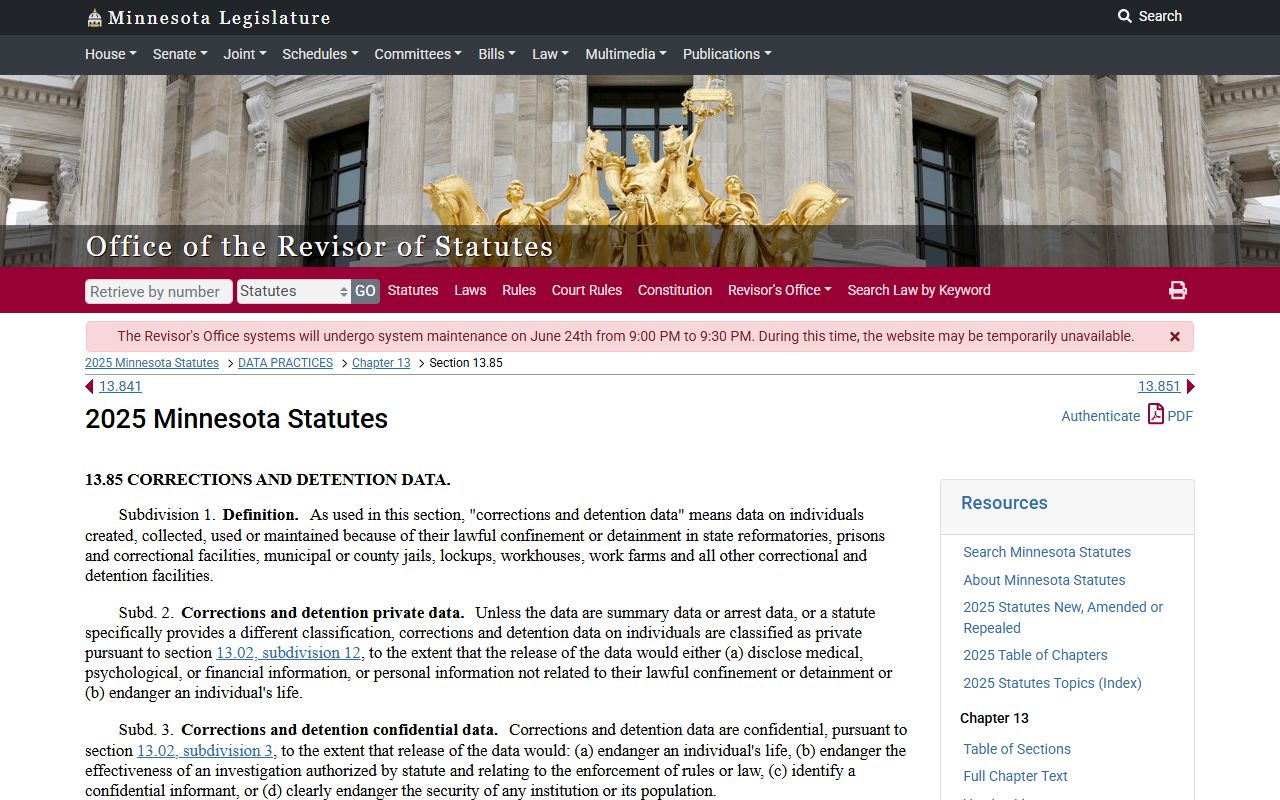
Custody data is released under corrections and detention law, and some details remain limited.
Source: https://www.bop.gov/inmateloc/
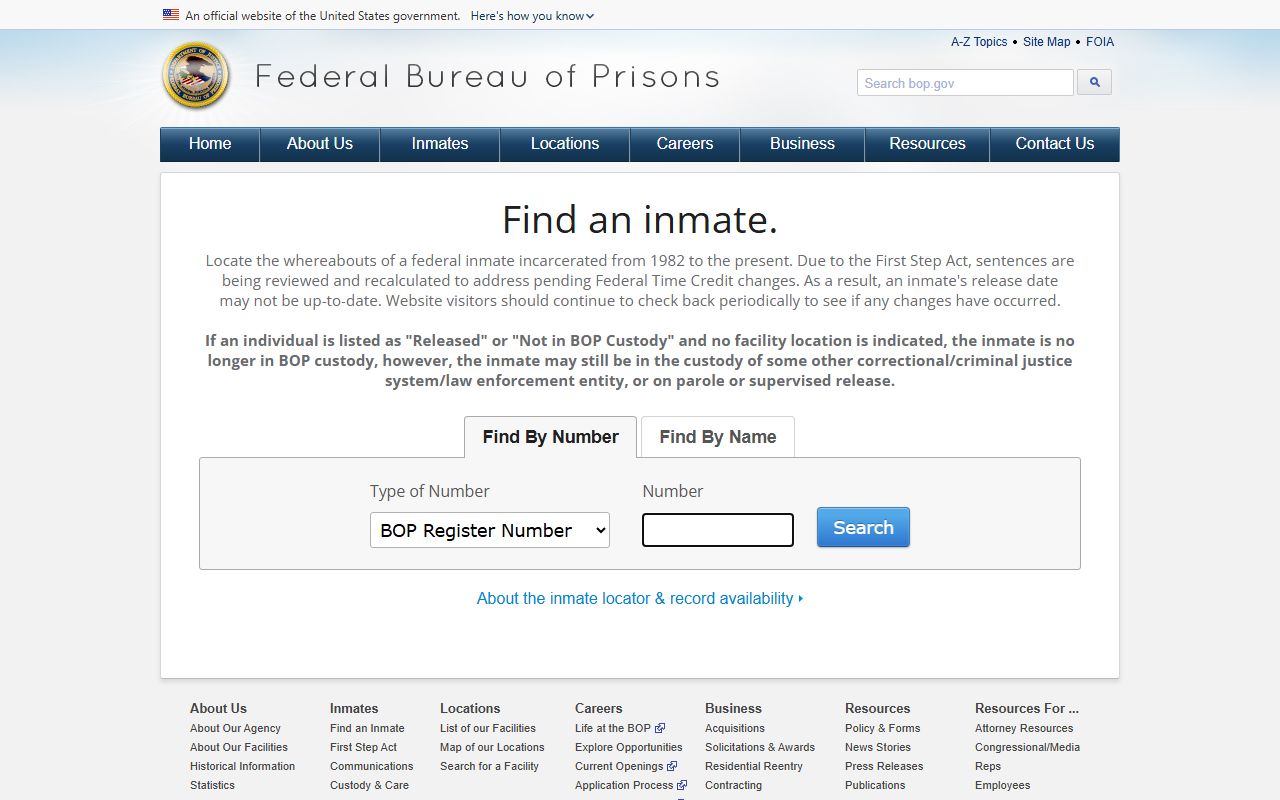
Use this when records indicate federal custody or federal transfer relevance.
Source: https://coms.doc.state.mn.us/publicviewer/
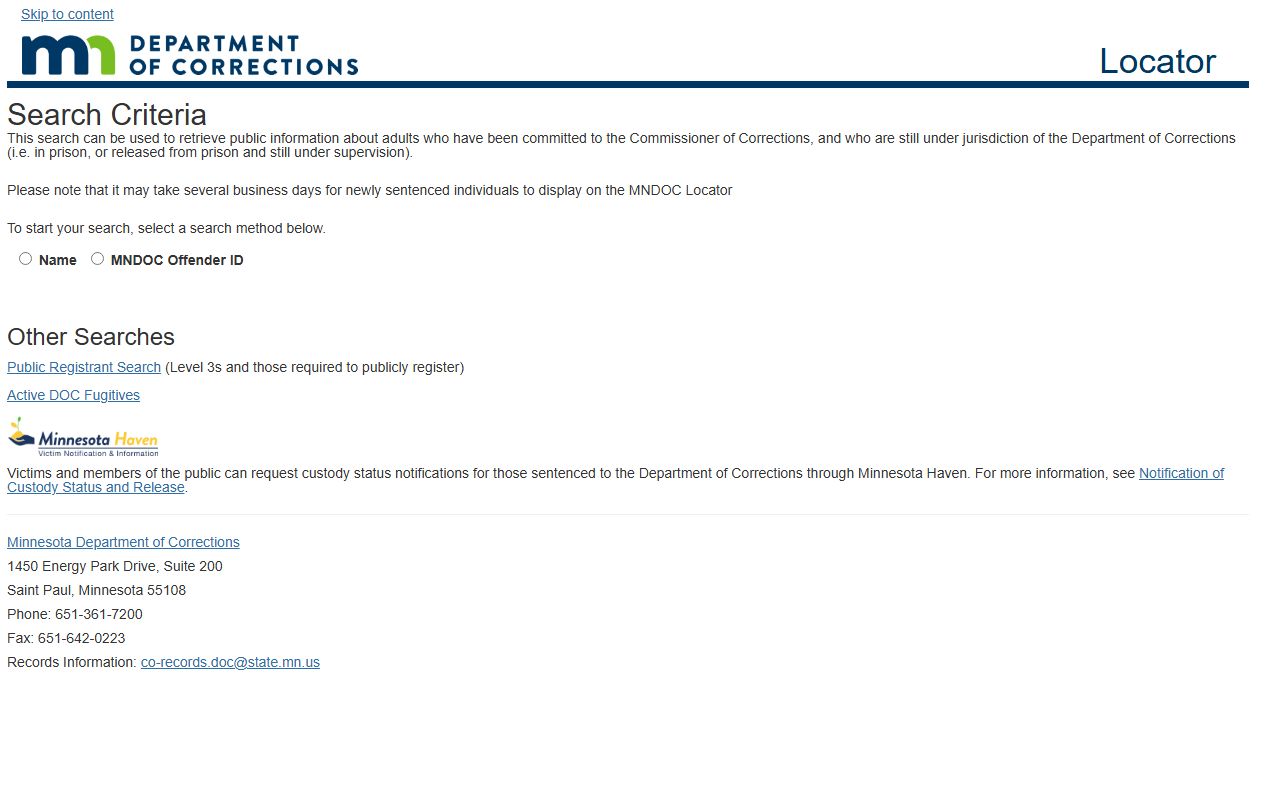
DOC results can confirm whether a person has active DOC custody or offense history outside county intake.
Other Inmate Record Channels
County jail rosters do not replace court records or statewide custody tools. A complete check includes:
For legal status, start at case channels and then use jail and custody channels to validate where someone is being housed. This avoids stale assumptions when a person has moved quickly.
- St. Louis County jail roster
- St. Louis County Sheriff public-data request channel
- MCRO case records for court case status and charges
- DOC and VINELink for custodial movement outside county jail
Custody Conditions and Support Pathways
The county profile points to a structured jail services environment with food, clothing, bedding, and medical support pathways. Medical care is available through licensed staff in-house and partner providers in the community, which is important for long bookings and court remands.
Inmates can also have programs tied to substance abuse, recreation, education, and religion. These details do not replace case records, but they help distinguish between a legal custody record and broader facility operations.
When a person is on DOC hold or involved in other multi-jurisdiction flags, DOC channels and federal custody tools can narrow the question to where the person is physically located versus where the active court file was filed.
How to Use the Roster
Use this practical sequence if a name does not seem to match your expectation:
- Check the current roster timestamp first.
- Open the 48-hour release roster and compare both lists.
- Match age, charge wording, and arresting agency to reduce mis-id.
- Look for transfer notes such as housing outside Duluth.
- Confirm court status in MCRO if legal disposition is needed.
If both rosters do not match and court action matters, move through official records channels before concluding release or transfer status.